


TC
The New York Times (Bosley Crowther)
Called it "steadily diverting" despite monotonous pace and length, noting a lack of attractiveness in leads but praising its realism.
Loading...

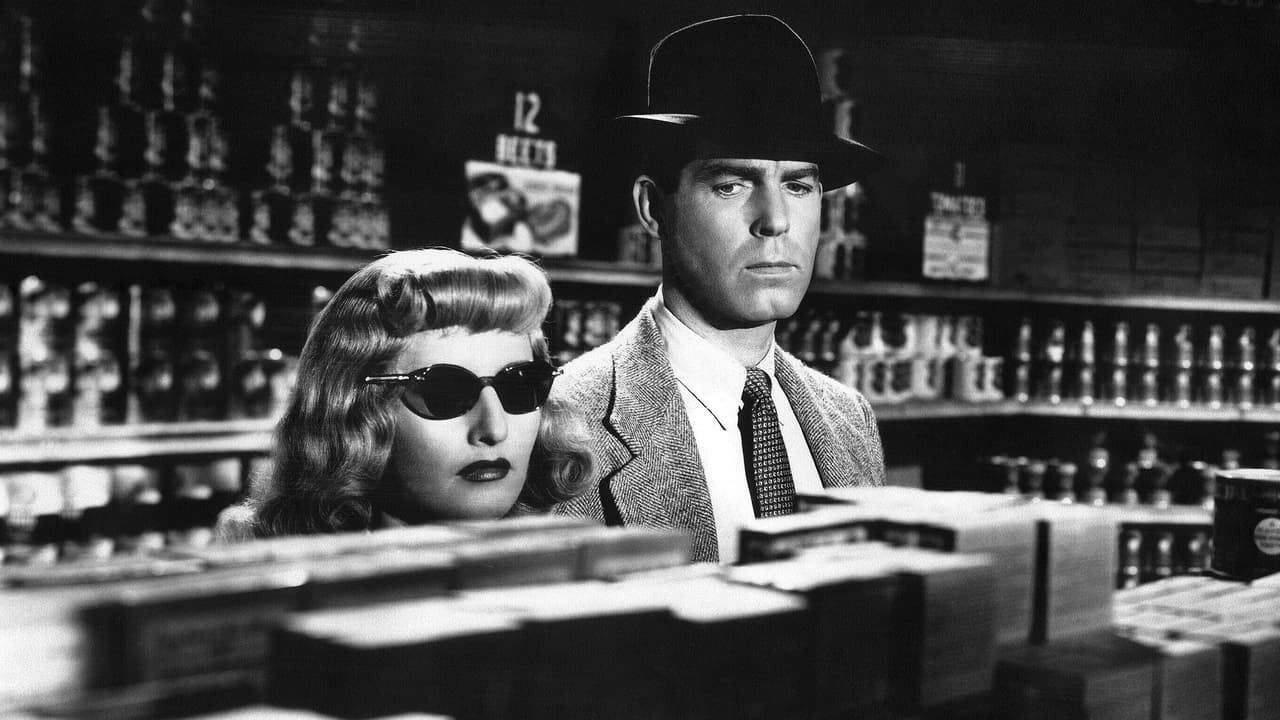
An insurance representative is seduced by a dissatisfied housewife into a scheme of insurance fraud and murder that arouses the suspicion of his colleague, a claims investigator.
Double Indemnity was an immediate hit, receiving largely positive contemporary reviews despite some discomfort with its content. It is now widely regarded as a classic film noir, praised for setting genre standards and often cited as one of the greatest films ever, earning universal acclaim from critics.
The Hays Office censor, Joseph Breen, initially warned studios that the novella was "thoroughly unacceptable for screen presentation" due to its "low tone and sordid flavor."
Due to Hays Code demands, the original novella's double suicide ending was changed to the two protagonists mortally wounding each other on screen.
Director Billy Wilder famously claimed he "drove [Raymond Chandler] back into drinking" while teaching the recovering alcoholic screenwriter how to adapt the story.
Actor Fred MacMurray initially told Billy Wilder he was "making the mistake of your life!" believing he lacked the skill for such a serious role.
Billy Wilder shot a scene for five days, spending $150,000 on it, and though considered one of his best, it was eventually removed to satisfy Hays Office concerns.
0 reviews
Avg: 0.0 / 5
The New York Times (Bosley Crowther)
Called it "steadily diverting" despite monotonous pace and length, noting a lack of attractiveness in leads but praising its realism.
New York Herald Tribune (Howard Barnes)
Praised it as "one of the most vital and arresting films of the year," highlighting Wilder's "magnificent direction" and "whale of a script."
Variety
Felt the film "sets a new standard for screen treatment in its category," signifying its groundbreaking impact on the genre.
Los Angeles Times (Philip K. Scheur)
Ranked it alongside "The Human Comedy," "The Maltese Falcon," and "Citizen Kane" as a Hollywood trailblazer.
Alfred Hitchcock
Stated that "Since Double Indemnity, the two most important words in motion pictures are 'Billy' and 'Wilder,'" praising Wilder's achievement.
Roger Ebert
Noted that John F. Seitz's photography "helped develop the noir style of sharp-edged shadows and shots, strange angles and lonely Edward Hopper settings."
Pauline Kael
Described it as a "shrewd, smoothly tawdry thriller" where "every turn and twist is exactly calculated," calling it a high point of 40s films.
Empire (Rob Fraser)
Enthused it was "Film noir at its finest, a template of the genre," praising Wilder, Stanwyck's performance, and MacMurray's role.
Loading reviews...