
PK
Pauline Kael
Praised its playful, inventive nature, lack of solemnity, terrific suspense, and described it as "great fun" and "great trash."
Loading...
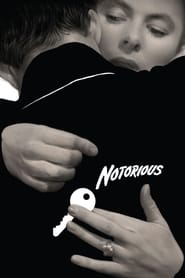
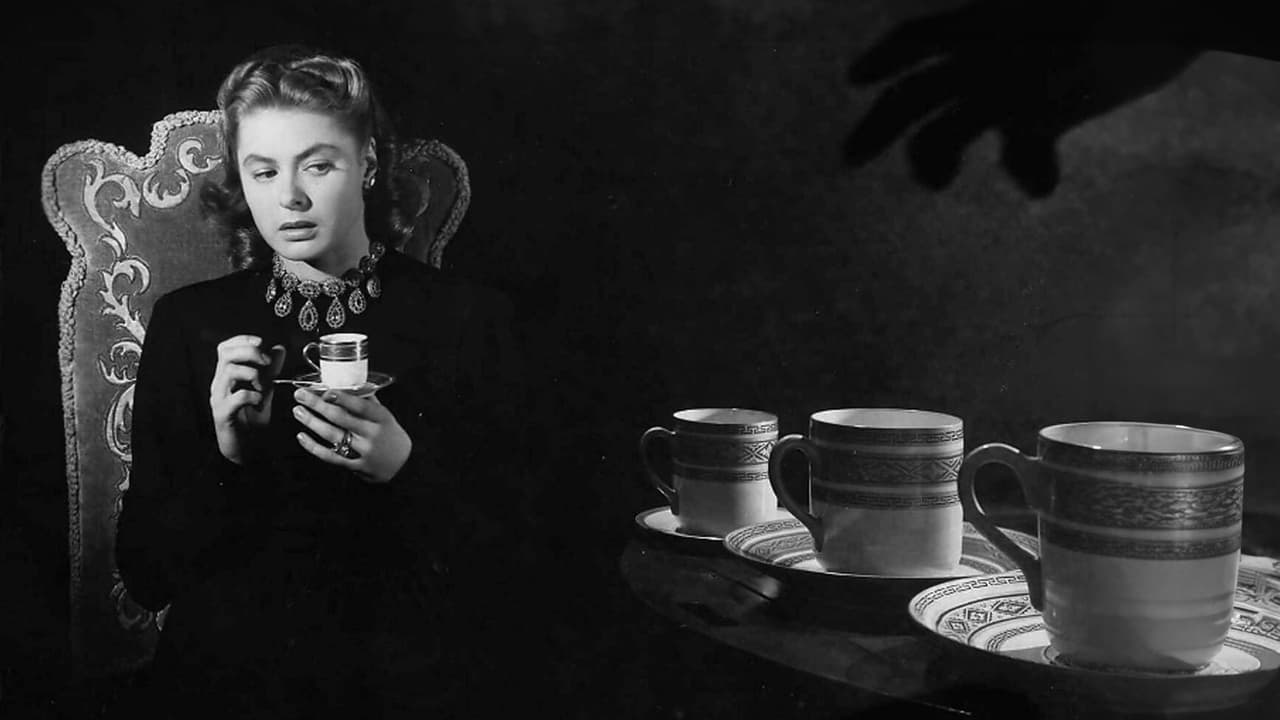
In order to help bring Nazis to justice, U.S. government agent T.R. Devlin recruits Alicia Huberman, the American daughter of a convicted German war criminal, as a spy. As they begin to fall for one another, Alicia is instructed to win the affections of Alexander Sebastian, a Nazi hiding out in Brazil. When Sebastian becomes serious about his relationship with Alicia, the stakes get higher, and Devlin must watch her slip further undercover.
Notorious received widespread critical acclaim, lauded as a thematic and artistic watershed for Alfred Hitchcock. Critics praised its brilliant style, suspense, and emotional depth, frequently listing it among the greatest films of all time.
Notorious was selected for preservation in the United States National Film Registry by the Library of Congress in 2006 for being "culturally, historically, or aesthetically significant."
The film's MacGuffin, a cache of uranium, led Hitchcock to claim the FBI followed him for months after he and Ben Hecht discussed it with a scientist in 1945.
Alfred Hitchcock became his own producer for the first time on Notorious, an important step that freed him from David O. Selznick's influence.
Hitchcock devised a system of ramps and suggested elevator shoes for Claude Rains to overcome his height difference with Ingrid Bergman during filming.
A two-and-a-half-minute kiss was broken into a string of shorter ones by Hitchcock to circumvent the three-second rule of the Production Code.
0 reviews
Avg: 0.0 / 5
Pauline Kael
Praised its playful, inventive nature, lack of solemnity, terrific suspense, and described it as "great fun" and "great trash."
The New York Times (Bosley Crowther)
Praised its brilliant direction and writing, calling it a thrilling romantic melodrama with smooth action, sharp characters, and intense emotional appeal.
The Nation (James Agee)
Noted its lack of some qualities of Hitchcock's best but praised its strong points, especially his skill in domestic psychology and creating shrewdly exciting moments.
Leslie Halliwell
Described it as a "superb romantic suspenser" featuring some of Hitchcock's finest work, glowing with praise despite his usual terse style.
Roger Ebert
Praised it as "the most elegant expression of the master's visual style" and included it on his "Great Movies" and "Ten Greatest Films of All Time" lists.
Patricia Hitchcock O'Connell
Her favorite of her father's films, she called it "a perfect film" and noted her enjoyment increased with rewatching.
Loading reviews...