

AS
Andrew Sarris
Praised the film's electrifying effects and careful construction, highlighting the psychological depth in Dietrich's transformation from sensual passivity to forceful fatalism.
Loading...
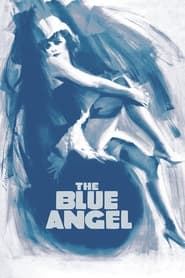
Prim professor Immanuel Rath finds some of his students ogling racy photos of cabaret performer Lola Lola and visits a local club, The Blue Angel, in an attempt to catch them there. Seeing Lola perform, the teacher is filled with lust, eventually resigning his position at the school to marry the young woman. However, his marriage to a coquette -- whose job is to entice men -- proves to be more difficult than Rath imagined.
The Blue Angel was an instant international success and is universally regarded as a classic of German cinema. It transcends its melodrama origins through Josef von Sternberg's complex, psychological direction and Marlene Dietrich's star-making, iconic performance.
The film brought Marlene Dietrich international fame and introduced her signature song, Friedrich Hollaender and Robert Liebmann's "Falling in Love Again (Can't Help It)".
The Blue Angel was filmed simultaneously in German and English versions, shot in tandem for efficiency to maximize profitability.
Although once considered a lost film, a print of the English-language version was discovered in a German archive and restored for screening in 2009.
The film was produced on an estimated budget of $500,000, which was remarkably expensive for a UFA production of that period.
During filming, nominal star Emil Jannings became jealous of director Josef von Sternberg and Marlene Dietrich's closeness, engaging in histrionics and threatening to quit the production.
UFA owner and industrialist Alfred Hugenberg attempted to block the film's premiere because of socialist author Heinrich Mann's association with the production.
Marlene Dietrich's iconic reclining pose with one leg elevated was selected only after a dozen other attitudes were tested and discarded.
The film features the famous carillon of the Garrison Church at Potsdam playing Mozart's 'Always Be True and Faithful', which was used to symbolize Prussian virtues.
Director Josef von Sternberg radically altered the narrative of the original novel, entirely inventing the professor's descent into a jealous rage and his final insanity.
0 reviews
Avg: 0.0 / 5
Andrew Sarris
Praised the film's electrifying effects and careful construction, highlighting the psychological depth in Dietrich's transformation from sensual passivity to forceful fatalism.
John Baxter
Described the film as revealing the tragic dignity of Rath's downfall, noting his true tragedy was failing to reconcile the loss of power with the acquisition of freedom.
Rotten Tomatoes Critics Consensus
Noted that Marlene Dietrich steals the show in this backstage tragedy about a lowly professor besotted with a cruel and enigmatic singer.
Loading reviews...
