RE
Roger Ebert
Hailed it as 'one of the great achievements of the silent era,' emphasizing its audacious vision and enduring relevance.
Loading...
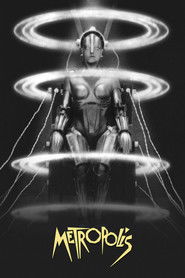
In a futuristic city sharply divided between the rich and the poor, the son of the city's mastermind meets a prophet who predicts the coming of a savior to mediate their differences.
Metropolis received initial mixed reactions regarding its plot but is now widely considered a cinematic milestone, lauded for its visual spectacle and immense influence on science fiction.
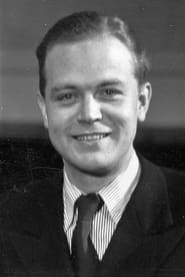
Gustav Fröhlich
Freder Fredersen

Brigitte Helm
Maria / The Machine Man
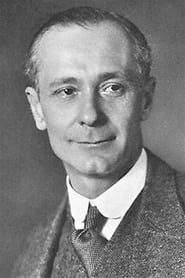
Alfred Abel
Johann 'Joh' Fredersen
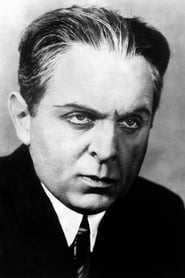
Rudolf Klein-Rogge
C.A. Rotwang

Theodor Loos
Josaphat
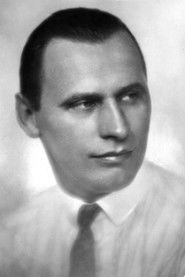
Fritz Rasp
The Thin Man
Erwin Biswanger
No. 11811 - Georgy
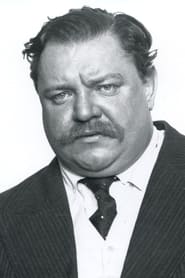
Heinrich George
Grot
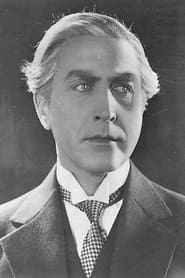
Fritz Alberti
Creative Human - Man Who Convinces Babel (uncredited)
Grete Berger
Working Woman (uncredited)
In 2001, it became the first film to be inscribed on UNESCO's Memory of the World International Register.
The iconic Maschinenmensch costume was built using 'plastic wood' over a full-body plaster cast of actress Brigitte Helm.
Director Fritz Lang made 500 children work in a cold pool for 14 days during production.
The screenplay was written by Thea von Harbou, who wrote the novel specifically to be made into a film.
Real fire was used for a scene where Brigitte Helm's dress caught fire.
Critics initially praised the visuals but dismissed the story as naive, with H.G. Wells calling it 'silly.'
Filming took place over a grueling 17 months in 1925–1926.
0 reviews
Avg: 0.0 / 5
Roger Ebert
Hailed it as 'one of the great achievements of the silent era,' emphasizing its audacious vision and enduring relevance.
Mordaunt Hall (The New York Times)
Described it as a 'technical marvel with feet of clay,' highlighting its technical prowess but perceived weaknesses in substance.
H.G. Wells
Dismissed the film as 'quite the silliest film,' indicating a strong dislike for its content.
Martin Scorsese
Included it in his list of '39 Essential Foreign Films' for young filmmakers.
Peter Bradshaw
Observed the Maschinenmensch as a 'brilliant eroticisation and fetishisation of modern technology.'
Loading reviews...
